
What's the deal with assistive technology in the NDIS?
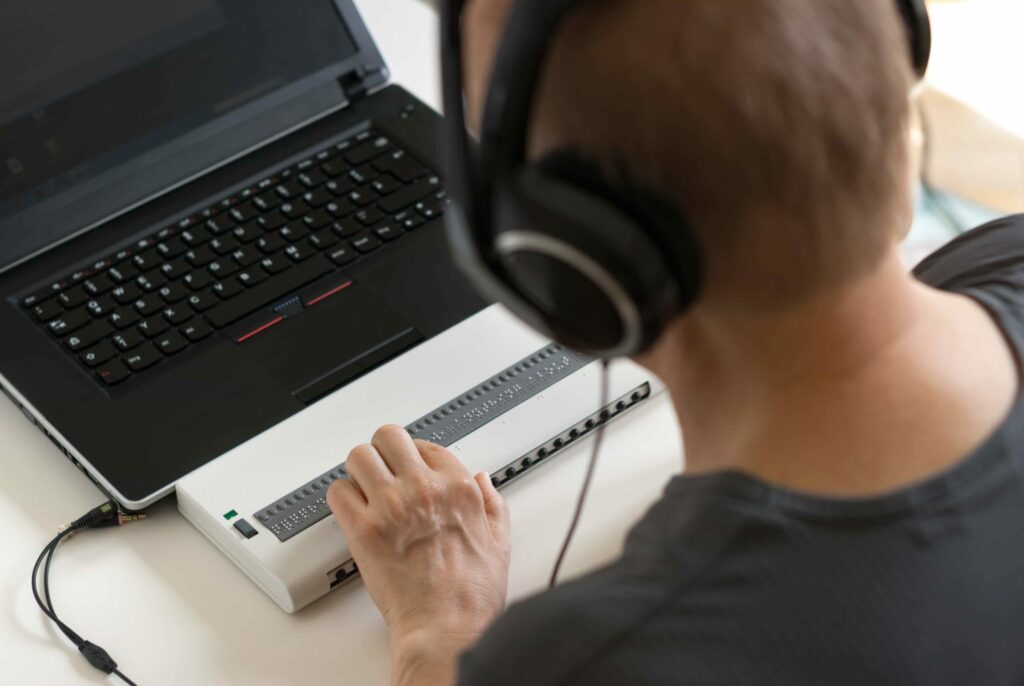
Ever heard the term ‘assistive technology’ and wondered what it means and whether it’s something you can access through your National Disability Insurance Scheme (NDIS) plan?
Yes? Well, you’re not alone. In fact, it’s one of the most common questions we get asked by our clients.
Whether you’re an NDIS participant, or hoping to be one soon, assistive technology might sound familiar, but it’s not always clear what it covers or how it can support you. So, let's take a closer look together.
According to the National Disability Insurance Agency (NDIA), assistive technology is equipment or devices that help you do things you can’t do because of your disability, or that may help you do something more easily or safely.
Don't let the word 'technology' confuse you though – assistive tech doesn't necessarily mean the latest, most expensive gadgets… although it covers them too! Instead, it’s a broad term that refers to many tools (which can be low or high tech), ranging from something as simple as a curved piece of plastic to help open a tin through to a customised powered wheelchair with tilt, raise and lower functions.
Some examples of assistive technology include:
- specialised eating utensils
- powered and non-powered wheelchairs
- laundry and washing line adaptors
- non-slip bathmats
- pencil grips
- shower chairs
- powered adjustable beds
- communication tools and software
When it comes to the NDIS, not all equipment or technology is classed as assistive. If a tool is something most people use in daily life, and it doesn’t help them overcome a disability-specific obstacle, then it isn’t considered to be assistive tech. That means things like fridges, radios and everyday household furniture are viewed as common items, not tools designed to support someone with disability.
What assistive technology does the NDIA fund?
The NDIA will only fund assistive tech that meets its reasonable and necessary criteria. When assessing a request, the Agency will consider whether the support:
- relates to your disability
- is right for you
- is value for money compared to alternatives
- should be funded or provided by another organisation or government service (e.g. Medicare)
The NDIA needs to understand your needs and how the right assistive technology will help you pursue the goals in your NDIS plan. The information it needs to inform its decision will depend on the assistive technology you’ve requested, its cost, and its risk.
There are three cost categories in the NDIS – low cost (items under $1500), mid cost (items priced from $1500 to $15,000), and high cost (items costing more than $15,000).
There are also two levels of risk that the NDIA uses to assess requests:
- Low risk – unlikely to cause harm in day-to-day life, available for trial and/or can be purchased in retail stores, and easy to set up and safely use without professional advice
- High risk – complex, known to have caused harm, used for a restrictive practice, and/or requires professional advice, set up or training for safe use
Where the equipment or tool you need sits on the cost/risk matrix will determine how you go about requesting it and the evidence you’ll need to provide to the Agency.
If you’re wanting to purchase something that’s low cost and low risk, you should be able to buy it without approval (using your Core Supports funding) as long it relates to your disability.
However, if you’re wanting to purchase assistive technology that costs more than $1500, you’ll need to provide evidence – like a letter of recommendation from a suitably qualified assessor/advisor (e.g. a physiotherapist, occupational therapist etc.) – and a cost estimate.
We explore letters of recommendation in this article.
Assessments are required for assistive tech purchases that cost $15,000 or more, and in those cases, a quote also needs to be supplied.
Quick tip: Higher cost items need to be stated in your NDIS plan, so assessments and quotes are best provided to the NDIA before your planning meeting or when you have a plan reassessment coming up.
This NDIA Guideline offers further information about how the Agency defines and funds assistive technology, and how to add it into your NDIS plan.
A chat with Brett Doyle from Healthport
You’ve read to the end of this quick explainer. Now here’s a chat with Brett Doyle, an assistive technology provider in the NDIS. Brett’s the director at Healthport, a company that specialises in wearable technology that’s empowering participants.
Be sure to read on for Brett’s top tips for choosing technology that’s the right fit.
Tell us about Healthport and how you support your clients.
Healthport is a local business that brings new technology health and medical products to Australia. Our goal is to help people with movement disorders, neurological conditions, or age-related tremor live more confidently and independently.
We work closely with occupational therapists, physiotherapists, plan managers and support coordinators across Australia to introduce evidence-based devices like the VILIM Ball and Steadi-3 glove. Both devices are TGA-approved hand-held therapy devices that temporarily reduce hand tremor for people with Parkinson’s Disease and Essential Tremor.
Rather than simply selling products, we focus on education, clinical support, and access. We help occupational therapists and plan managers understand the science behind each device and ensure that clients receive the right solution for their needs.
What’s your experience working with NDIS participants?
We work with NDIS participants every day – directly and through their therapists, support coordinators, and plan managers. Many of the NDIS participants we help live with conditions like Essential Tremor, Parkinson’s Disease, Multiple Sclerosis, or Functional Neurological Disorder, where fine motor control and confidence are daily challenges.
Our team understands the funding process, so we make it easy for allied health professionals to request a quote or invoice, provide clinical documentation, and support claims under assistive technology (low-cost or mid-cost). We also offer education sessions and trial programs in conjunction with allied health professionals, so participants can experience the device’s benefits before committing.
How can assistive technology complement therapeutic supports and how does it benefit those who use it?
Assistive technology works best when it extends the impact of therapy beyond the clinic. For example, vibration therapy with the VILIM Ball can temporarily reduce tremor for up to several hours, allowing someone to eat, write, or hold a cup more easily – which in turn supports occupational therapy goals like independence in daily tasks.
When used consistently, assistive technology devices can help people practice motor control, maintain confidence, and participate more fully in activities they’d otherwise avoid. The feedback we hear most often is “It gives me my hands back for a while” – and that empowerment is the real benefit.
With a huge variety of options in the market, what are your tips for choosing assistive technology that’s the right fit?
Start with function and evidence. Look for devices that are clinically validated or TGA-approved and have clear information about how and for whom they work.
Second, consider ease of use – if a device is too complicated, people won’t use it consistently.
Third, always trial before purchase wherever possible. Even two people with the same diagnosis can respond differently, so a short-term trial or money back guarantee helps ensure it meets the client’s needs.
And finally, involve the support team – the occupational therapist, physio, and plan manager – early in the process so the right documentation and funding pathways are in place from the start.
Recent posts
18 February 2026
28 January 2026
26 January 2026
29 September 2025
You may also like...
 How My Plan Manager protects you from NDIS fraud and what you can do tooAs Australia’s largest plan manager, protecting your data and your National Disability Insurance Scheme (NDIS) funding is our top priority.
 My Plan Manager’s client portal: take control of your NDIS spendingWe have a handy piece of tech that puts you in control of your dollars – and your days! We explain all the best features of our client portal here.
 My Plan Manager's provider portal - NDIS claims made easyYou’re a provider in the National Disability Insurance Scheme (NDIS). You’re supporting a client and we’re their plan manager. You’ve scoped out their supports, you’ve signed off on a service agreement, and you’ve started putting your expertise to work. So, when the supports have been delivered and it comes time…
 Our client portal putting you in the driver's seatOur client portal is a powerful tool that puts you in the driver’s seat of your NDIS journey.